
Tracking Artemis II from the Ground
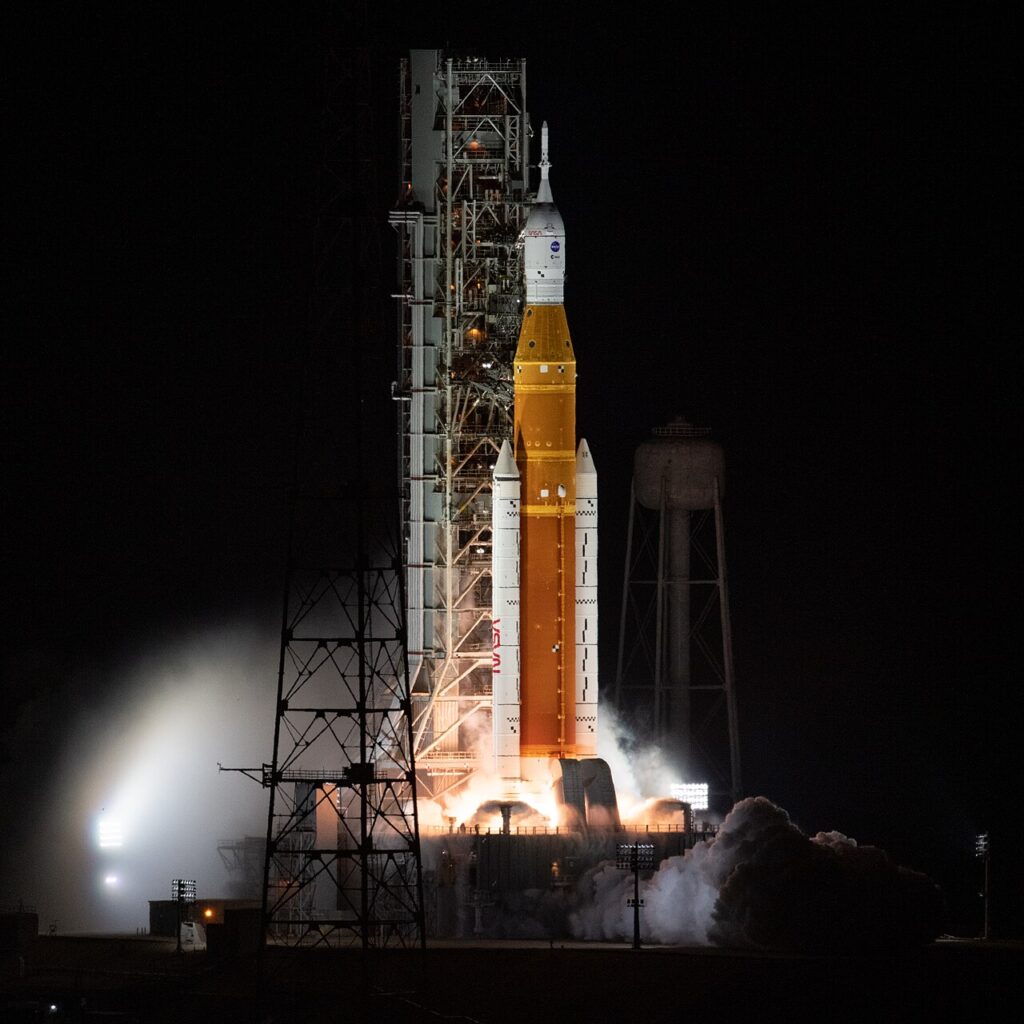
On 1 April 2026, NASA’s Artemis II lifted off from Kennedy Space Centre, carrying a four-person crew toward the Moon for the first time since 1972.
Over the nine days that followed, Spaceflux’s optical sensor network tracked the mission independently through every operationally significant phase, from the first hours after launch to the return arc before splashdown, using only ground-based optical observations and the Cortex tasking platform.
This article documents what the network saw, when it saw it, and why a calibrated, independent optical record of a crewed lunar mission matters in the current space surveillance environment.
What was at stake
Artemis II was not a routine tracking target.
A nine-day crewed mission transiting multiple orbital regimes, deploying secondary payloads, and returning on a constrained re-entry corridor presents a sequence of scenarios in which independent ground-based observation could be the difference between a controlled operator response and operating blind.
Had the staging sequence under-performed and Orion drifted into an off-nominal trajectory, we would have confirmed the new path independently of the spacecraft telemetry chain. A break-up of the ICPS, or debris shed during its disposal burn, would have been catalogued by the network within hours. Had the European Service Module burn failed and Orion deviated from its lunar transfer arc, we would have characterised the deviation directly. And had the re-entry corridor become contested by debris on inbound approach, we would have supported deconfliction in near real time.
In each of those cases, persistent, independent, timely optical coverage is what gives operators a second source of truth at the moment they most need one. That is the operational value the network is built to deliver. Artemis II flew nominally. Future missions, allied or otherwise, may not.
The Plume
Just over three hours after launch, the chi-7 sensor in Chile recorded Orion and its upper stage at approximately 32,000 km altitude, still joined as a single object – with a clearly visible plume.
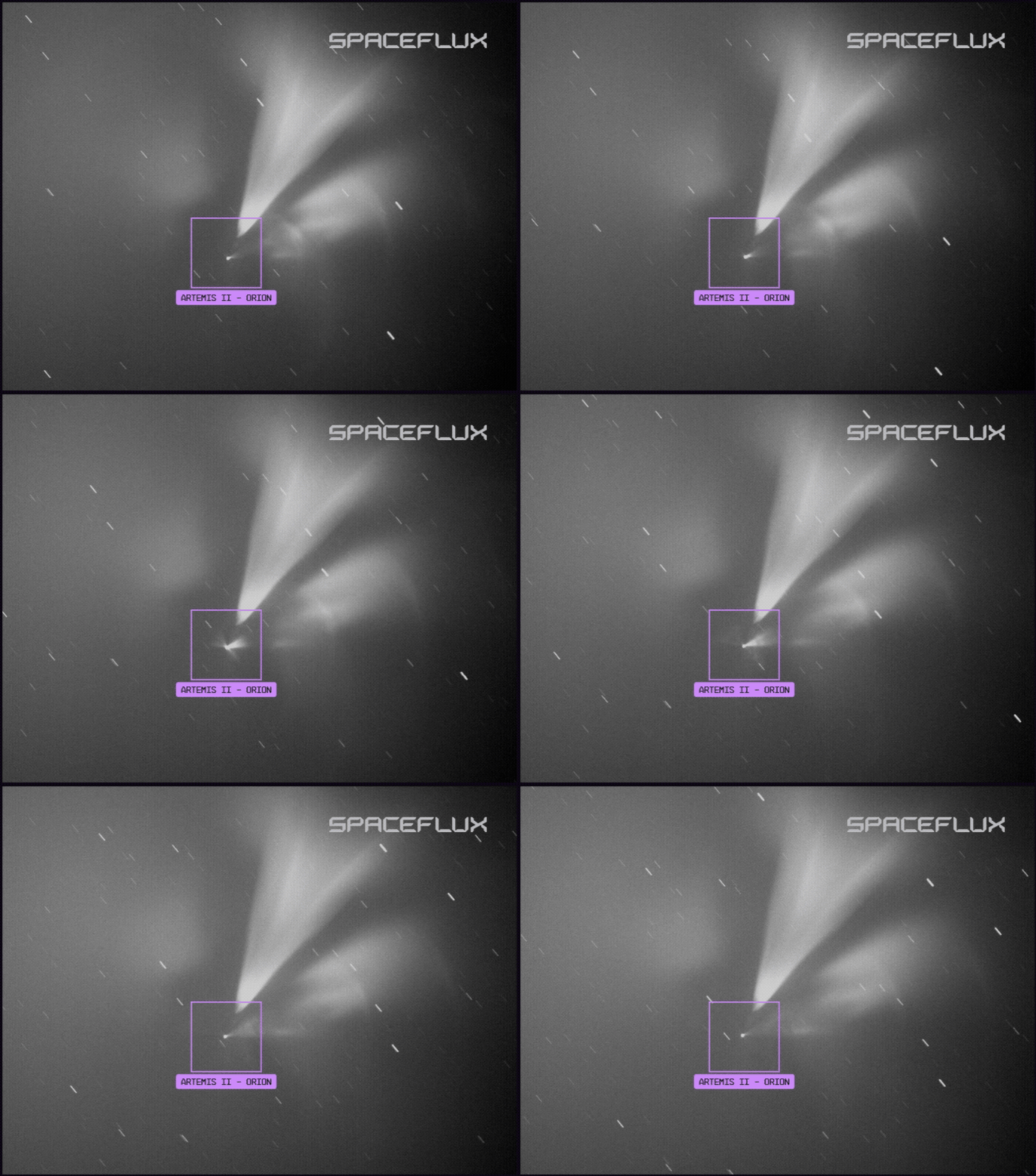
The Interim Cryogenic Propulsion Stage (ICPS) – the upper stage that sends Orion toward the Moon – had completed its apogee raise burn nineteen minutes earlier. The plume visible in the chi-7 footage is consistent with cryogenic venting, or with attitude-control thruster activity, both of which are expected post-burn behaviours. This first detection set the calibration baseline for everything that followed.
Separation
By the early hours of 2 April, Orion and the ICPS had separated. The network captured the moment and tracked both objects independently from then on.
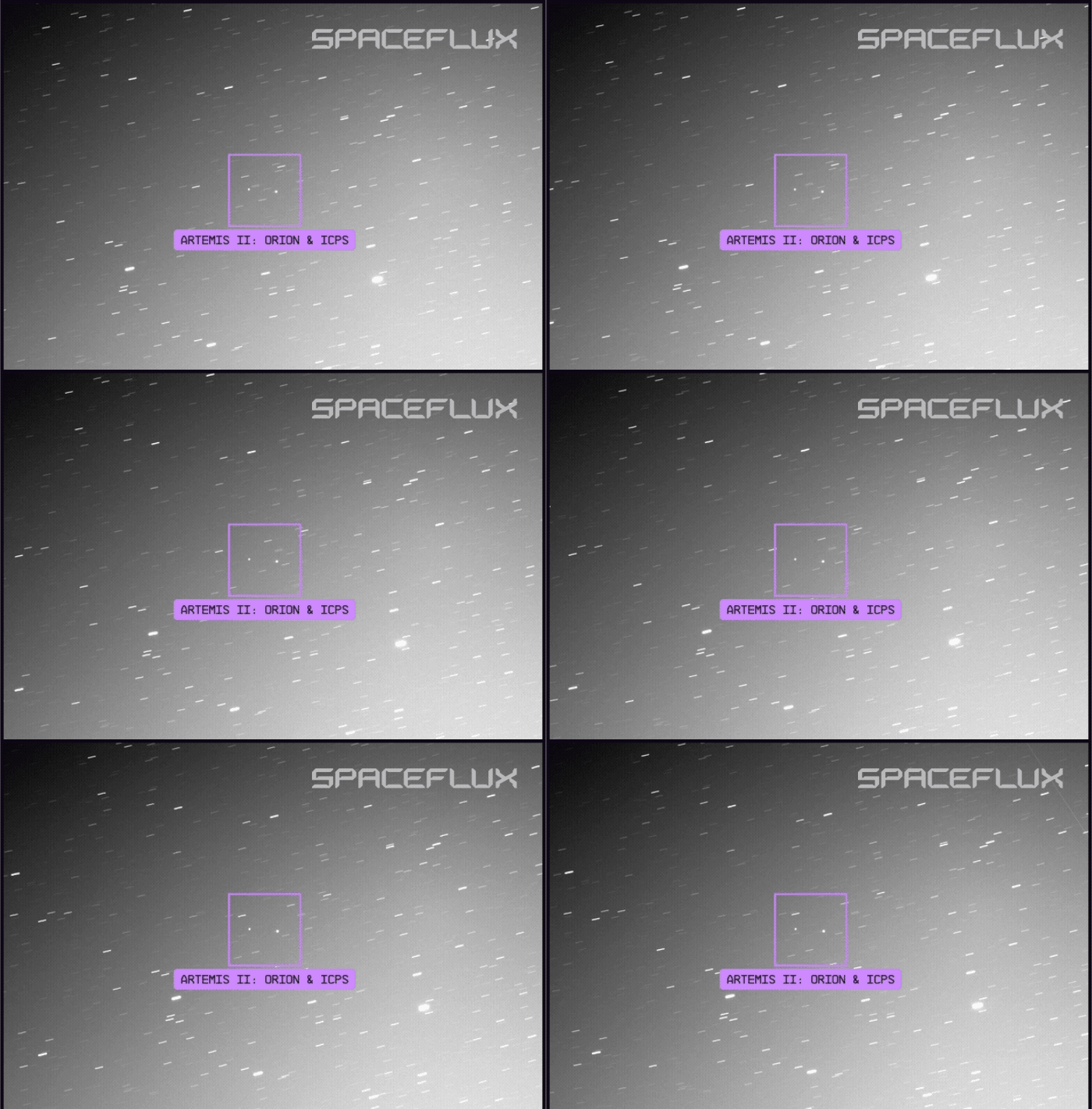
Observations from spa-4 in Spain at 04:16 UTC show two distinct objects where there had been one. Proximity operations were complete and the ICPS had performed its disposal burn – the manoeuvre that sends an upper stage onto a separate trajectory away from the spacecraft it was carrying. By 08:16 UTC, sensor chi-7 in Chile recorded the two objects noticeably further apart, with their angular separation growing over the four hours between sessions as Orion continued outbound and the ICPS drifted on its own arc.
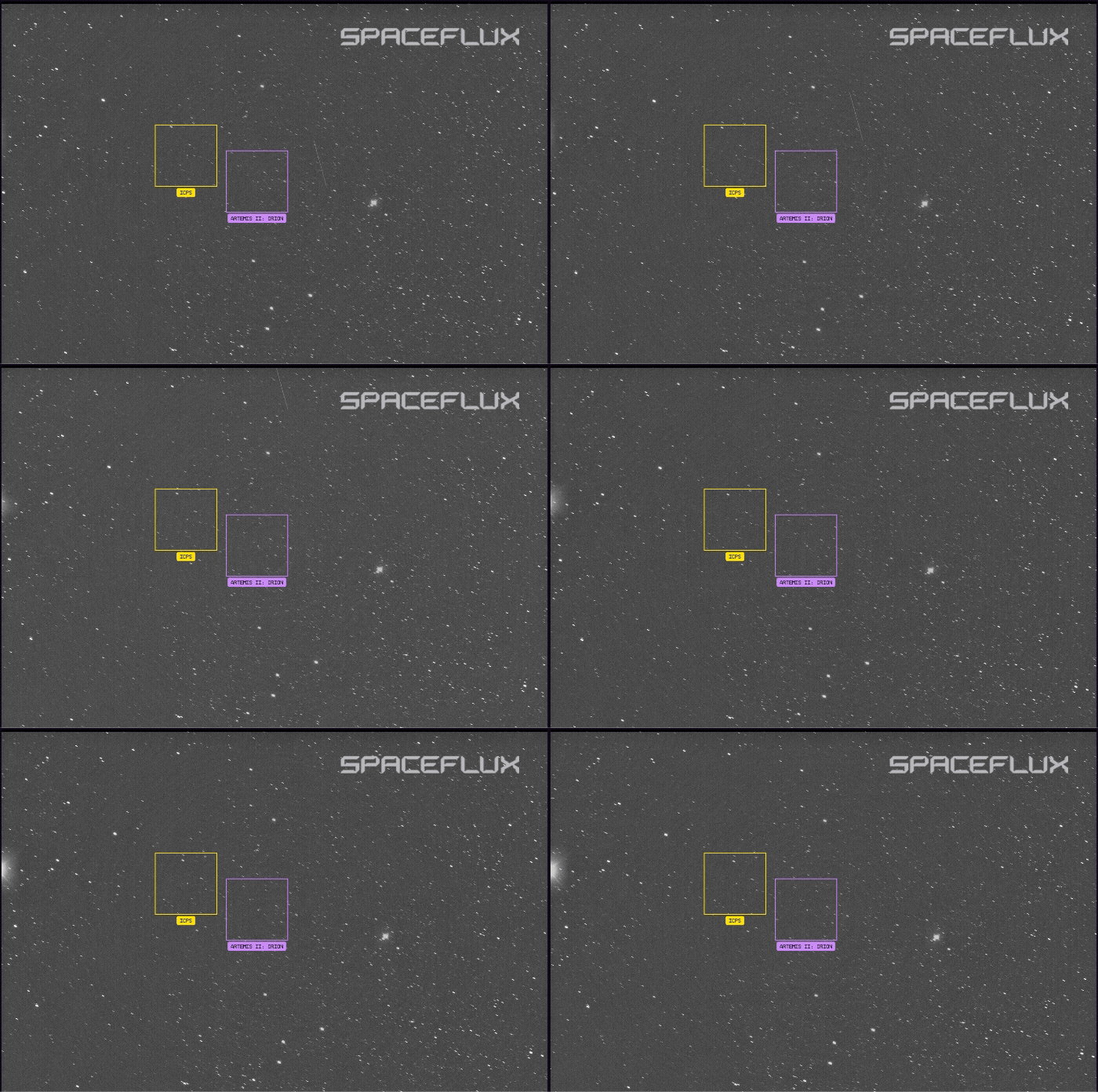
A first analytical signal was already emerging: the brightness behaviour of the ICPS, examined in detail in the analysis section below, indicated that the upper stage was already tumbling during these early observations.
Across 67 sessions between 03:43 and 18:19 UTC, our network collected 885 calibrated measurements of Orion and 851 of the ICPS from sensors across Spain, Chile, the USA, and Australia.
CubeSat Deployment
Less than two hours after detecting the upper stage separation, the chi-7 sensor identified four CubeSats deploying from the SLS Orion Stage Adapter – and tracked each independently from the moment of release.
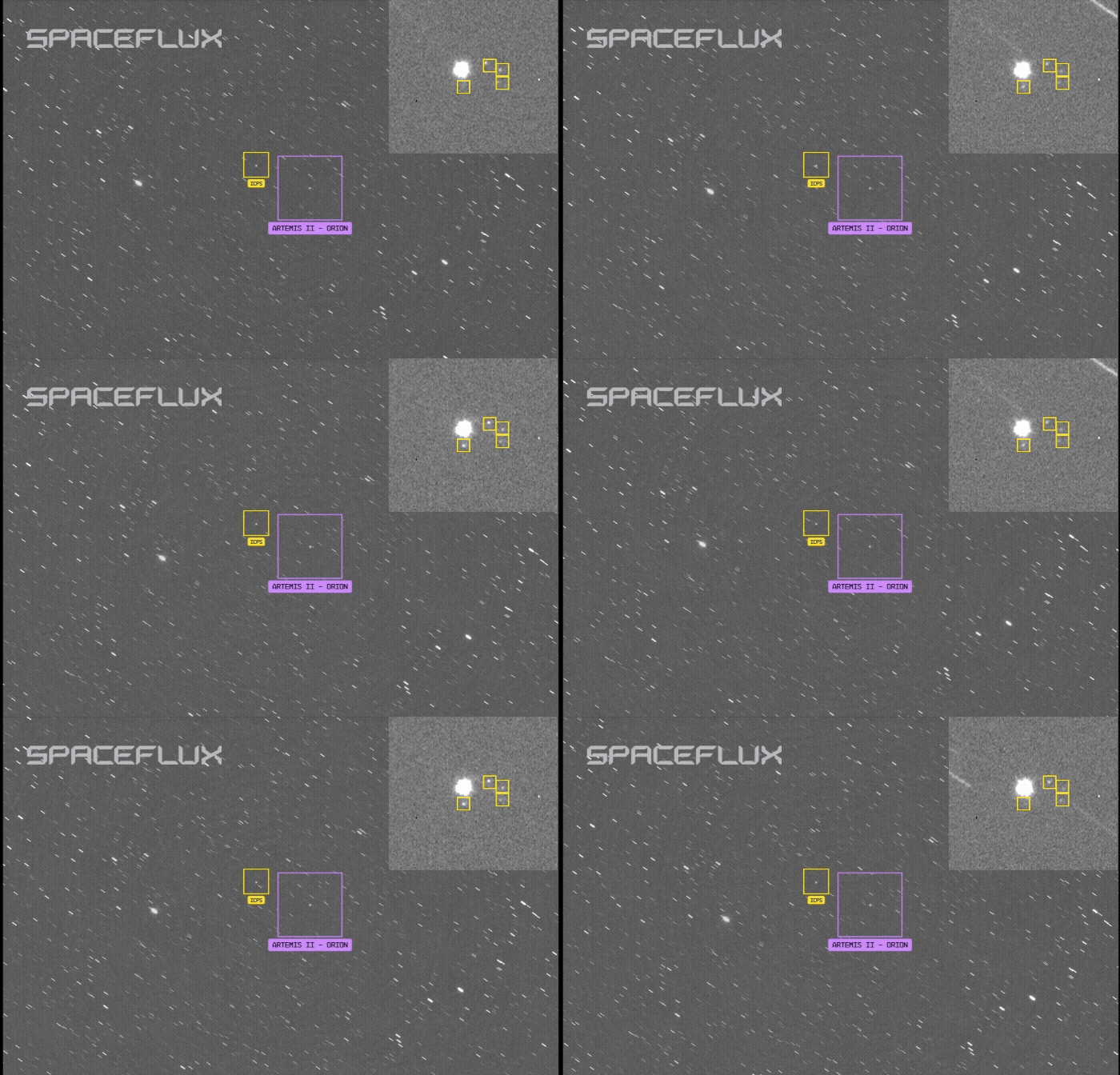
The four secondary payloads – contributed by Argentina, Saudi Arabia, Germany, and South Korea – separated from the adapter into independent trajectories. Within minutes, our network was tracking the four CubeSats alongside Orion and the ICPS; six independently observed objects from a single launch.
Shortly afterwards, Orion’s European Service Module fired for five minutes and fifty seconds, committing the crew to the lunar free-return trajectory.
By the end of the departure phase, seven sensors across four continents had observed every operationally significant event of the mission’s outbound leg.
Six independently observed objects from a single launch (the four CubeSats, Orion, and the ICPS) tracked and characterised through the network’s own optical and analytical pipeline.
Return Arc
Eight days later, as Orion completed its return from the Moon, two sensors on opposite sides of the planet independently confirmed the inbound trajectory within seven minutes of each other.
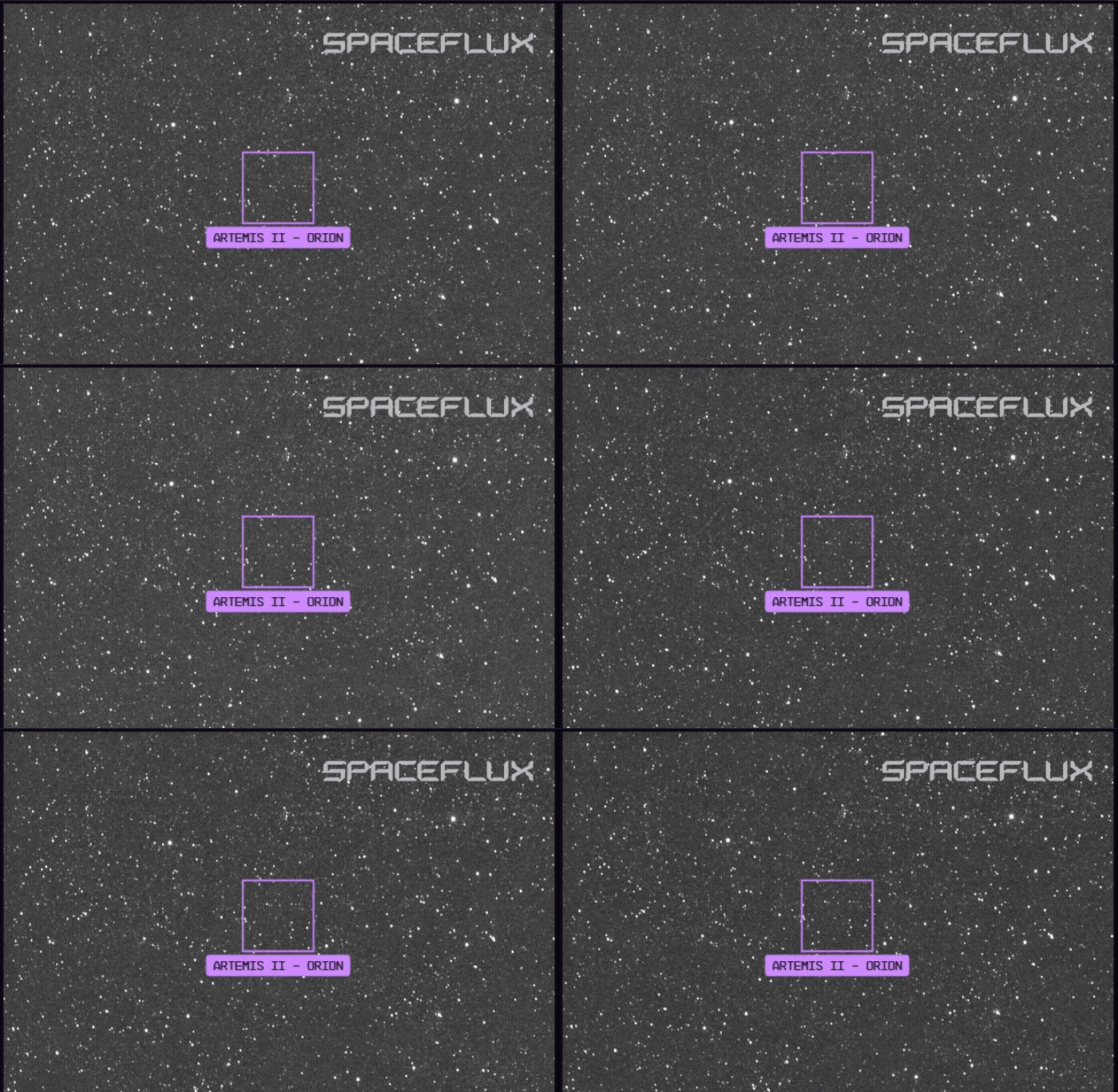
10:32 UTC, 10 April 2026 | T+~204h | sensor usa-nm-1, New Mexico
Sensor usa-nm-1 in New Mexico and aus-wa-1 in Western Australia detected Orion in close succession, providing cross-continental confirmation of the return path.
The return arc was among the more challenging phases to observe: Orion’s approach coincided with near-daylight conditions across the Australian network, the kind of operational scenario in which standard optical tracking typically loses coverage.
Detection in this regime is a function of network design: sensor placement, scheduling, and the resilience of the underlying tasking layer.
Splashdown followed at 00:07 UTC on 11 April.
What the Light Tells Us
This is where the campaign moved from tracking to intelligence.
Light reflected from a man-made object in space carries information about that object’s geometry, orientation, and behaviour.
With enough calibrated observations from enough vantage points, that information becomes a behavioural signature: distinctive, measurable, and operationally meaningful.
A functioning spacecraft and an uncontrolled piece of debris look different in the data, and calibrated optical photometry distinguishes them.
The 1,736 calibrated measurements collected across the campaign (885 of Orion, 851 of the ICPS) tested that proposition directly.
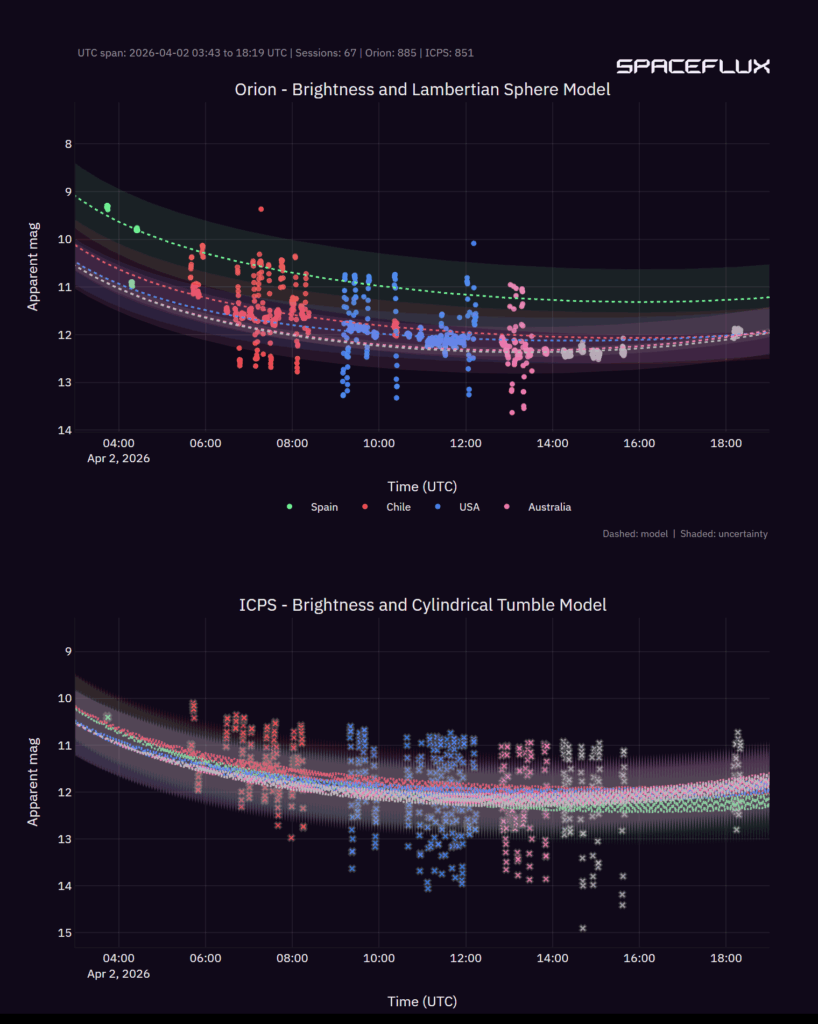
Orion’s signature was predictable and smooth.
Its brightness faded from magnitude 9.5 to 12.5 as range increased from approximately 30,000 to 90,000 km, closely matching a Lambertian sphere reflectance model – a standard optical model for a roughly spherical, diffusely reflecting object. Per-site residuals were as low as 0.07 magnitudes.
In other words, what the network observed of Orion behaved exactly as a controlled, attitude-stable spacecraft should behave
The ICPS told a different story.
Its photometric signature was scattered and chaotic, spanning more than three magnitudes of brightness variation. To characterise its rotation, we modelled the ICPS as a tumbling cylinder and fitted a physical reflectance model to the observed brightness distribution across all sessions. The variation in cross-section presented to each observer as the stage rotates produces precisely the wide spread of brightness values the network recorded.
A periodogram analysis across 56 sessions – using the Lomb-Scargle technique, a standard method for identifying periodic signals in irregularly sampled data – then identified dominant peaks consistent with a 32-second end-over-end tumble, producing a 16-second brightness repetition due to the twofold symmetry of the cylindrical stage.
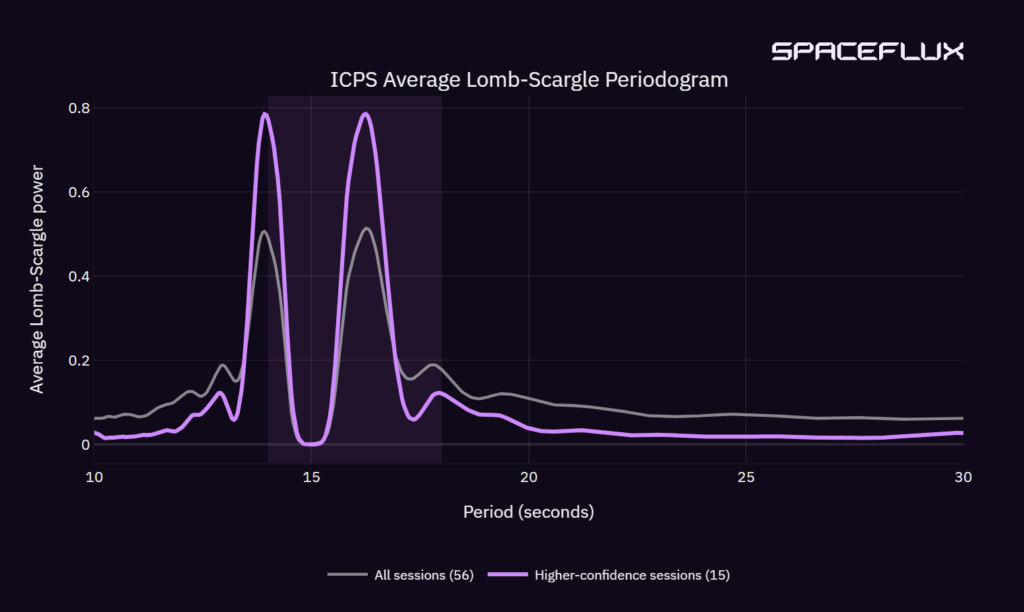
Two objects, observed by the same network over the same arc, with two distinct signatures. One controlled, one uncontrolled.
Why this matters now
Artemis II was a high-profile target and a co-operative one. Its trajectory was published, its hardware was known, its mission profile was on the public record.
The campaign that tracked it tested whether an independent, ground-based optical network could keep pace with a fast-moving, multi-regime, nine-day mission and produce a calibrated record of every operationally significant phase.
The capability is not specific to Artemis II.
The same network and the same analytical pipeline that distinguished Orion from a tumbling ICPS resolves any cislunar object the same way, including objects whose operators do not publish their trajectories.
Cislunar traffic is increasing. Commercial lunar landers, allied science and infrastructure missions, communications relays, and missions of interest from non-allied state actors will all operate in the regime in the years ahead.
The ability to detect, track, and characterise objects in cislunar space using calibrated ground-based optics, independent of any single state’s tracking infrastructure, is moving from a useful capability to a structural requirement for allied space surveillance.
A capability proven against a co-operative target sets the floor for what should be expected against an uncooperative one. The Artemis II campaign establishes that independent ground-based optical can deliver continuous, calibrated coverage of a nine-day cislunar mission.
The same network is available for the missions that follow.
What This Demonstrates
Independent, autonomous, globally distributed optical sensing is now a structural component of allied space surveillance. It belongs in the operational picture in its own right, alongside the national systems with which it integrates.
Artemis II was a crewed spacecraft on a nine-day mission to the Moon, transitioning through multiple orbital regimes, deploying secondary payloads, and returning on a constrained re-entry corridor.
Every phase our network could physically observe, was observed. Every observation was calibrated.
The resulting record is independent of any single sensor network and integrated through the Cortex platform, and it’s available, in near-real time, to the operators and decision-makers who depend on having more than one source of truth at the moments that matter.
Three points are worth drawing out for the institutions and operators who will rely on capabilities of this kind in the years ahead:
- Coverage was continuous because the network was designed for it. Seven sensors across four continents, scheduled and tasked autonomously through Cortex, delivered persistent coverage from launch through splashdown – including the harder regimes (high range, near-daylight, fast return arc) that are out of reach for most single-site or regional networks. Persistent cislunar capability of this kind is rare; resilience across daylight transitions, rarer still.
- Independence was structural, not contingent. Beyond publicly available launch information, no element of the campaign relied on tasking, trajectory data, or observation cues from third parties. Every object was acquired, tracked, and characterised on the strength of the network’s own optical and analytical pipeline. This is the architecture allied governments increasingly require for sovereign Space Domain Awareness – and it is in place today.
- Behavioural intelligence is operational. The Orion-ICPS comparison shows that calibrated photometry, at scale, distinguishes a controlled spacecraft from an uncontrolled object using only ground-based optical data. The same approach applies to every operational object the network observes.
Artemis II returned humanity to lunar trajectory.
The campaign that tracked it carried a parallel message.
When a national space operations centre needs to confirm an anomaly. When a constellation operator needs a second observation on a conjunction. When a programme office needs to verify the post-burn behaviour of a high-value asset. When an allied command needs to attribute an event in a regime where its own sensors are blind.
The infrastructure for that confirmation – independent, calibrated, available across the orbital regimes that matter – is operational, in production, and watching.
PRESS RELEASE: Spaceflux selected for NATO DIANA’s Mission Track
Spaceflux has been selected as one of 15 innovators worldwide to advance into Mission Track of the NATO DIANA Accelerator Programme, the only Space Intelligence company chosen this year. LONDON, UK: Spaceflux Ltd, a UK based leader in Space Domain Awareness (SDA) and Space Intelligence, has been selected to advance into Mission Track – Phase…
PRESS RELEASE: Spaceflux and Mitsubishi Electric Corporation to explore space domain awareness collaboration in Japan
The two companies have signed a Memorandum of Understanding to assess opportunities to bring advanced space domain awareness capabilities to the Japanese market, as the United Kingdom and Japan continue to deepen their strategic partnership. LONDON / 17th Jun 2026 — Spaceflux, the UK space intelligence company, and Mitsubishi Electric Corporation (“Mitsubishi Electric”) have signed a Memorandum of Understanding (MoU) to explore…
PRESS RELEASE: Spaceflux Raises £9 Million To Expand Space Intelligence Globally
London-based space intelligence company Spaceflux has raised £3.5 million in an extension to its seed round, bringing total funding to £9 million which will accelerate global expansion. The extension was led by existing investor Blackfinch Ventures with a major follow-on, alongside continued participation from Foresight Group and the UK Innovation and Science Seed Fund (managed…
Newsletter signup
Stay informed about the latest advancements in optical space tracking, technology releases from Spaceflux Labs, and early access to new capabilities.